For more than a century, cameras carried an unspoken truth: seeing was believing. A photograph was proof. A video was undeniable evidence. That age is gone.
In today’s world, artificial intelligence and deep learning have birthed a new kind of digital illusion — deepfakes — capable of fabricating people, events, and voices with astonishing realism. These are not traditional edits; they are complete reconstructions of reality, built pixel by pixel. Every photo, clip, and sound bite you encounter online could be synthetic.
This isn’t just a technical milestone — it’s an existential crisis for truth itself. Deepfakes now challenge journalism, democracy, and personal identity. In an era where anything can be faked, we must ask: what, if anything, can we still trust?
The Engine of Deception: How AI Redefines Reality
The word deepfake combines “deep learning” and “fake,” reflecting its roots in modern artificial intelligence. These systems don’t merely edit media — they generate it from scratch, transforming the internet into a stage for digital impersonators.
The Power of Generative Adversarial Networks (GANs)
At the heart of this technology lies Generative Adversarial Networks (GANs) — two AI systems locked in a constant duel.
-
The generator creates fake images or videos.
-
The discriminator evaluates whether they’re real.
Through this feedback loop, the generator improves until its fakes become indistinguishable from genuine footage. What began as an academic experiment has become a weapon of mass deception.
The scale is staggering: deepfake-related frauds have surged by over 245% in recent years. With open-source tools and mobile apps available to anyone, powerful synthetic media creation is now just a download away.
Distorting the Public Sphere
Deepfakes are being used not only to entertain — but to manipulate. Their most dangerous impact lies in politics and media, where they blur the boundary between fact and fiction.
Real-World Examples
-
Warfare Propaganda: During the Russia–Ukraine conflict, a fake video showed President Volodymyr Zelenskyy urging soldiers to surrender. The goal was psychological warfare — to spread confusion and fear before truth could catch up.
-
Election Interference: A deepfake robocall imitating President Joe Biden told voters to skip the 2024 U.S. primaries. In Slovakia, fake audio of a candidate discussing vote rigging circulated days before the election — possibly swaying the results.
-
Political Smear Campaigns: Synthetic clips have been used to frame opponents in compromising situations, eroding public trust in elections and journalism alike.
The Erosion of Truth in Journalism
Deepfakes threaten journalism in two devastating ways:
-
They can trick reporters into amplifying falsehoods.
-
They enable the “liar’s dividend” — when real evidence is dismissed as fake.
When everything can be forged, bad actors can simply deny authentic footage by labeling it a deepfake. This erodes public confidence, turning skepticism into cynicism.
The Private Cost: Deepfakes as Weapons of Fraud and Exploitation
While political fakes grab headlines, the most damaging uses occur in business and personal life.
Corporate Fraud
Deepfake-driven scams have exploded — especially in corporate environments. In 2024, a Hong Kong employee of engineering firm Arup was conned into wiring $25 million after attending a video meeting with AI-generated avatars of his executives.
Financial and Biometric Attacks
Deepfakes are now used to bypass facial recognition and voice authentication. Voice cloning can replicate anyone’s tone with just three seconds of audio, enabling emotional scams where victims believe they’re helping loved ones in distress.
Non-Consensual Content
Most deepfakes online involve explicit, non-consensual images — often targeting women. These digital assaults destroy reputations and cause severe emotional trauma, making privacy itself a casualty of the technology.
Fighting Fabrication: How to Detect and Defend
Defending truth in the deepfake era requires both technical tools and critical thinking.
1. AI Forensics and Detection Tools
Experts are developing forensic software that identifies tiny, often invisible flaws:
-
Uneven pixel noise
-
Irregular shadows or lighting
-
Unnatural eye movements or blinking patterns
-
Missing physiological cues (like breathing or pulse changes)
2. Authentication and Watermarking
Instead of just detecting fakes, new approaches aim to verify authenticity.
-
Digital Watermarks: Invisible signals embedded in original content that break if altered.
-
Blockchain Verification: Timestamped metadata stored on secure ledgers to prove origin and track tampering.
3. Media Literacy for Everyone
Every viewer is now a fact-checker. To spot deepfakes:
-
Check the source: Is it verified? Is the story covered by reputable outlets?
-
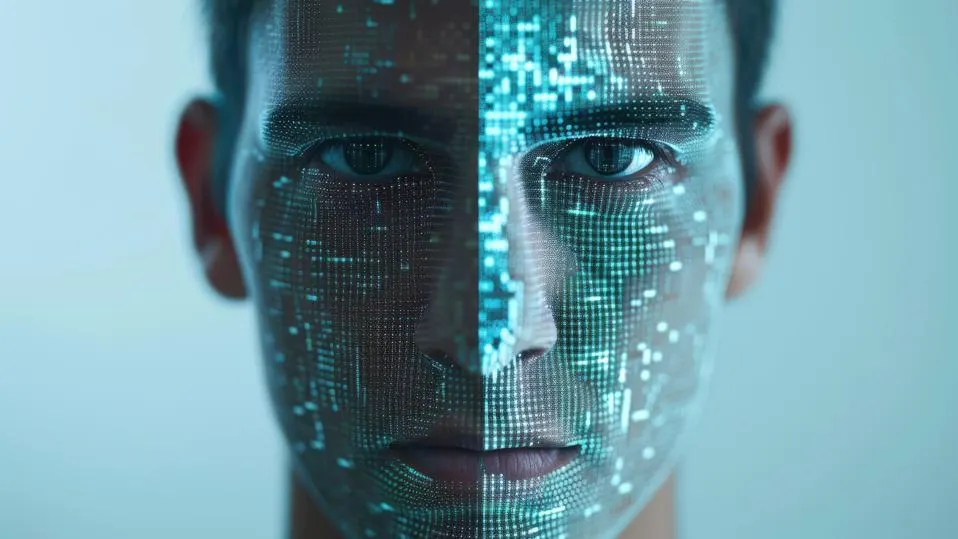
Look for visual flaws: unnatural blinking, mismatched lighting, distorted fingers or ears.
-
Use reverse image search: Tools like Google Images can reveal earlier versions or context.
-
Pause before sharing: Emotional content is the easiest to weaponize — verify before amplifying.
The New Reality: Skepticism as Survival
Deepfakes have ushered us into an era where images lie and voices deceive. They threaten truth, reputation, and democracy itself. But they also challenge us to evolve — to build systems of verification and habits of skepticism that can withstand digital illusion.
Ultimately, technology alone won’t save us. The real defense lies in education, vigilance, and a culture that prizes truth over virality.
In this new information war, doubt isn’t weakness — it’s protection.
When seeing is no longer believing, thinking critically becomes the only way to see clearly.